What Does Picosecond Laser Tattoo Removal Cost?
For consistent quote comparisons, this guide uses $200-$500 per session as a rounded editorial planning band. It is not a government price statistic. Actual quotes vary by provider, location, tattoo size, ink characteristics and package terms.
The package table uses 6-12 treatment sessions to illustrate totals from $1,200-$6,000 at that price band. This is arithmetic, not an outcome forecast. The FDA says laser removal requires multiple treatments and complete removal may not be possible.
Editorial Laser Tattoo Removal Price per Session
Per-session pricing means you pay for each appointment separately. The $200-$500 band is a calculation input only; this guide does not map tattoo size, density, layering or color to a particular point within it.
If a provider advertises a price such as “$99 per session,” check the qualifying tattoo size, appointment, treatment area and expiry. Ask whether later sessions use the same rate and whether the quote includes consultation fees, deposits or other charges.
If a clinic offers a discounted package, compare it with the applicable pay-per-session total. For example, eight sessions at $350 each equal $2,800 before discounts. Ask how many sessions are included, what additional sessions cost, and whether unused sessions expire.
How Much Do 6-12 Treatment Sessions Cost?
Example Totals for 6, 8, 10, and 12 Sessions
The table below shows undiscounted totals at three deliberately rounded per-session price points.
| Quoted sessions | $200 per session | $350 per session | $500 per session |
|---|---|---|---|
| 6 | $1,200 | $2,100 | $3,000 |
| 8 | $1,600 | $2,800 | $4,000 |
| 10 | $2,000 | $3,500 | $5,000 |
| 12 | $2,400 | $4,200 | $6,000 |
These figures are arithmetic inputs, not a market baseline. Ask each provider to explain which tattoo and service details affected the final quote.
Session Estimate vs. Sessions Included in a Package
Suppose a hypothetical written estimate used 6-12 sessions while the prepaid package contained only six or eight visits. Those numbers would not be interchangeable. In a real comparison, replace all three counts with the provider’s own estimate and package terms.
For example, an eight-session package priced at $2,400 may look less expensive than paying $350 per visit, which would total $2,800. However, if the provider later recommends two additional sessions at $400 each, the projected total becomes $3,200.
Ask what happens if you need appointments beyond the package. Also check whether unused prepaid sessions are refundable, transferable, or subject to an expiration date. Results vary; discuss expectations and the quoted session range at a consultation with a licensed provider.
Package Discounts and All-In Package Prices
If a clinic discounts a prepaid package or includes a visit at no added charge, compare the package total with the regular per-session price instead of relying on the advertised savings.
Before paying, request a written breakdown covering:
- Number of sessions included
- Per-session price outside the package
- Consultation fees and required deposits
- Financing interest or administrative charges
- Cancellation, rescheduling, and expiration terms
- Refund rules for unused sessions
- Any other expected provider charges
A low package price may exclude costs that another clinic includes. Prices vary widely, so confirm the all-in package price during your consultation.
What Factors Affect Picosecond Laser Tattoo Removal Cost?
Ask the provider to document the tattoo’s dimensions, observed ink characteristics, design complexity, location, age and treatment history, then explain which of those details affected the session estimate or price. This guide does not assign a universal adjustment to any factor.

Tattoo Size, Ink Density, and Layering
Ask whether tattoo size is priced by square inches, named categories or another method. Do not assume that a 2-inch design belongs near the lower end of this guide’s $200-$500 editorial band; use the provider’s measured category and written rate.
Ask how observed ink density, application and layering affected the quote. Have the clinic record the measured dimensions, pricing category, estimated range and assumptions in writing rather than inferring a price or visit count from the tattoo label.
Ink Color and Multicolor Tattoos
Black, red, green, blue, and other pigments may influence equipment selection. Providers can use different wavelengths, including 532 nm, 755 nm, and 1064 nm, depending on the ink colors and available laser platform.
A multicolor tattoo may therefore receive a different quote from a similarly sized black tattoo. Ask which wavelengths are available, whether the same price applies at every appointment, and whether changing equipment creates additional charges. A device name alone does not determine the total cost.
Tattoo Age, Location, and Previous Treatments
Tattoo age and body location are additional inputs in a provider’s assessment. A previously treated tattoo may also require closer review because its remaining ink pattern can differ from untreated work.
Bring details about earlier sessions, including the laser type and approximate dates, if available. The clinic should use this information to explain its session estimate and package options. Prices vary widely, so confirm the all-in package price, included sessions, and cost of additional appointments before committing.
Picosecond vs. Q-Switched Laser Pricing
How PicoSure, PicoWay, and Q-Switched Quotes Differ
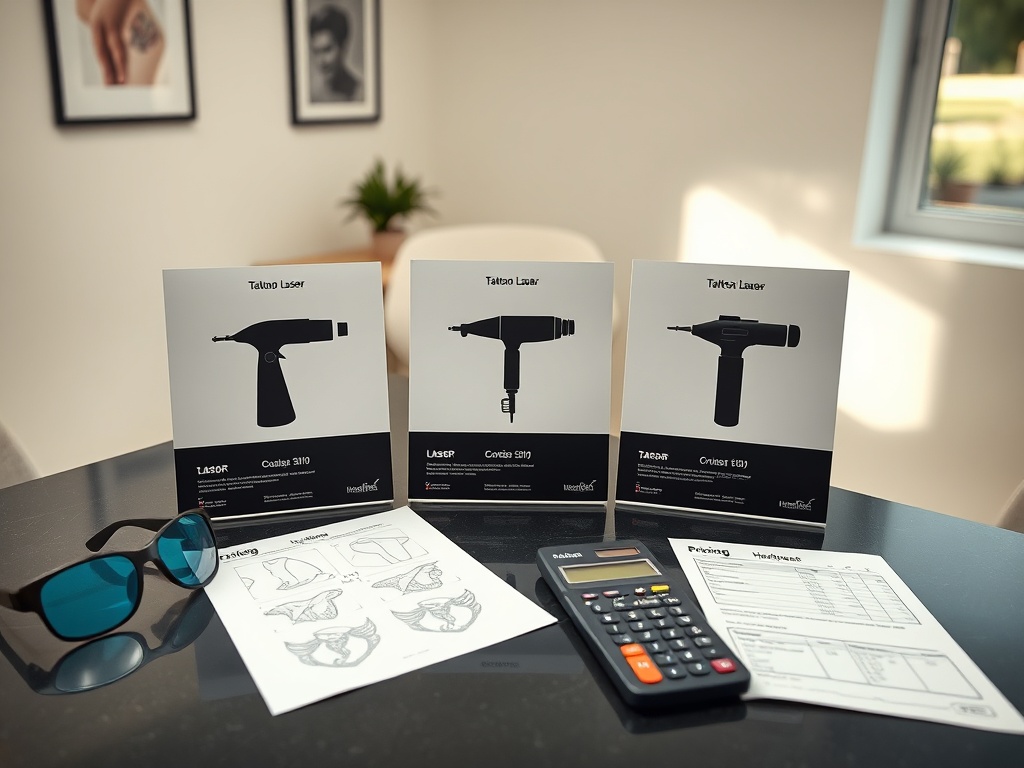
Picosecond platforms such as PicoSure and PicoWay may receive different per-session quotes from Q-switched systems, but pricing is not standardized and a device name does not establish the total cost.
| Quote factor | Picosecond laser | Q-switched laser |
|---|---|---|
| Pulse terminology | Picosecond pulse duration | Nanosecond pulse duration |
| Price assumption | No assumed premium; use the written rate | No assumed discount; use the written rate |
| Package structure | Fixed-session packages or per-session billing | Fixed-session packages or per-session billing |
| Key comparison | Device, wavelengths, inclusions, total quote | Device, wavelengths, inclusions, total quote |
Do not assume that a higher session price means fewer appointments. Comparative trials test specific devices, wavelengths, tattoo types and protocols, so their findings do not guarantee an individual result. Compare the provider’s quoted session range, package size and charges for visits beyond the package.
Why Available Wavelengths Matter When Comparing Quotes
Different ink colors can influence which wavelengths a provider includes in the treatment plan. Nd:YAG laser platforms commonly offer 532 nm and 1064 nm, while alexandrite laser platforms may use 755 nm.
Ask each clinic which wavelengths are available and whether using more than one wavelength changes the price. A familiar device name alone does not determine value. Provider credentials, tattoo-removal experience, equipment access, and transparent package terms also matter.
Treatment Price Is Not the Laser Machine Purchase Price
Search results for picosecond laser tattoo removal cost may show the purchase price of a professional laser machine. That equipment price is unrelated to the amount a consumer pays per session.
For a useful comparison, request written quotes from licensed providers covering the device model, per-session rate, estimated session range, included package sessions, and additional fees. Prices vary widely, so confirm the all-in package price during the consultation.
How to Compare Tattoo Removal Clinics and Studios
Provider and Equipment Checklist
Compare qualifications and equipment before comparing discounts. Ask each tattoo removal clinic or studio:
- Is treatment performed by a licensed provider?
- How much tattoo-removal experience does the provider have?
- Which laser model is used, such as PicoSure, PicoWay, or a Q-switched laser?
- Are 532 nm, 755 nm, and 1064 nm wavelengths available?
- Is the equipment an FDA-cleared laser device?
- Will the provider explain the session estimate and pricing in writing?
A thorough consultation should address your tattoo’s size, ink colors, density, layering, and previous treatments.
Reusable Tattoo Removal Quote-Comparison Table
Use the same categories for every provider so introductory offers do not distort the comparison.
| Quote detail | Clinic A | Clinic B | Clinic C |
|---|---|---|---|
| Price per session | |||
| Quoted session range | |||
| Sessions included in package | |||
| Package total | |||
| Included services | |||
| Device model and wavelengths | |||
| Deposit and payment terms | |||
| Estimated extra charges |
Also record package expiration dates, cancellation fees, financing costs, and the price of sessions beyond the prepaid package.
Why the Cheapest First Session May Not Be the Best Quote
An introductory rate should not be treated as the course total. For example, the invented scenario of one $99 visit followed by seven $400 visits totals $2,899 before extra charges. This illustrates arithmetic only; it does not claim that providers use those rates or counts.
Compare the projected total, not just the first payment. Provider credentials, equipment access, consultation quality, package conditions, and clear answers about additional fees all affect value. Prices vary widely, so confirm the all-in package price during your consultation.
Questions to Ask Before Buying a Treatment Package
Consultation Fees, Deposits, and Financing
Ask whether the tattoo removal consultation is free, charged separately, or credited toward treatment. If a deposit is required, confirm whether it is refundable and whether it reduces the package balance.
For financing, request the total repayment amount, interest rate, administrative fees, payment schedule, and late-payment terms. A smaller monthly payment does not always mean a lower total cost.
Expiration, Cancellation, and Unused-Session Terms
Review the package rules before prepaying. Ask:
- Does the package expire?
- Are there cancellation or rescheduling fees?
- How much notice must you provide?
- Are unused sessions refundable or transferable?
- What happens if the provider recommends fewer or more sessions than the package includes?
- Does moving to another clinic affect any prepaid balance?
In an editorial example, a 6-12-session estimate paired with a fixed six-session package leaves unanswered questions about extra-visit rates and unused-visit value. Apply that check to the actual numbers and terms in the written quote.
What Should Be Included in the Written Quote?
Request an itemized quote showing:
- Regular laser tattoo removal price per session
- Number of sessions included
- Package discount and final package total
- Quoted session range
- Consultation fee and deposit
- Financing interest and other charges
- Price for sessions beyond the package
- Expiration, cancellation, and refund terms
- Device model and available wavelengths
Compare the written total with per-session pricing. For example, eight visits at $350 equal $2,800 before discounts. A $2,400 package saves $400 only if it covers all eight visits without added provider charges.
Prices vary widely, so confirm the quoted session range and all-in package price during the consultation.
Picosecond Laser Tattoo Removal Cost FAQ
How much does picosecond laser tattoo removal cost per session?
This guide uses $200-$500 per session as an editorial planning band. It is not a verified national average and a real quote can fall outside it. Ask the provider to document its calculation.
How should I use the 6-12-session example?
At 6-12 sessions, the guide’s $200-$500 example equals approximately $1,200-$6,000 before discounts and fees. That is package math, not a market statistic or a statement that a particular tattoo will need that range. Replace it with the provider’s written low and high estimate.
Is picosecond removal more expensive than Q-switched treatment?
This guide does not assume that either technology carries a price premium. Compare written quotes for the same tattoo and scope, including device model, available wavelengths, provider credentials, quoted session range and total projected cost. Do not assume either laser type will require fewer sessions.
Are tattoo removal packages worth buying?
A package may offer value when the discount is clear and the included session count matches the provider’s estimate. Check expiration dates, refund rules, financing costs, consultation fees, and the price of additional sessions. Six sessions at $350 each cost $2,100 before any package discount.
Does insurance cover tattoo removal?
Coverage and medical-necessity exceptions differ by insurer and circumstance. Ask the insurer for a written decision and confirm documentation, authorization and out-of-pocket charges before assuming coverage or noncoverage.
How much does a picosecond laser machine cost?
The purchase price of equipment such as PicoSure or PicoWay is separate from the treatment price consumers pay. Clinic quotes reflect provider pricing, equipment access, treatment-area size, and package terms.
Prices vary widely. Confirm the all-in package price, included sessions, and extra charges during a consultation.
Official sources and methodology
- FDA: Tattoo Removal - Options and Results covers FDA-cleared laser devices, wavelength selection by ink color, multiple treatments, incomplete removal and known risks.
- PubMed: 2026 randomized split-tattoo picosecond versus nanosecond alexandrite trial is a device- and protocol-specific comparative study; it does not establish a universal session advantage for every picosecond platform or tattoo.
- PubMed: prospective randomized comparison of two picosecond lasers with a nanosecond laser provides additional comparative evidence while illustrating why device, wavelength and tattoo type must be kept in scope.
Price and package figures are rounded editorial examples, not FDA data. Replace them with current written quotes for the same tattoo, device, included services and contract terms.
This article provides general cost and safety information and is not a substitute for medical advice, diagnosis, or an individualized consultation with a qualified healthcare professional.
Laser tattoo removal can cause pain, swelling, blistering, burns, infection, scarring, and temporary or permanent changes in skin pigmentation. Discuss your skin type, medical history, medications, previous reactions, and individual risks with a properly qualified provider before treatment.
Laser light can cause serious eye injury. Appropriate wavelength-specific eye protection must be used by the patient, operator, and everyone present during treatment.
Licensing, supervision, and scope-of-practice requirements for laser tattoo removal vary by jurisdiction. Verify the provider’s current credentials and compliance with applicable local laws before treatment.
FDA clearance of a laser device does not by itself establish the operator’s qualifications or guarantee safe or successful treatment. Verify the specific device, its intended use, and the clinic’s safety procedures.